Physical Address
304 North Cardinal St.
Dorchester Center, MA 02124
Physical Address
304 North Cardinal St.
Dorchester Center, MA 02124

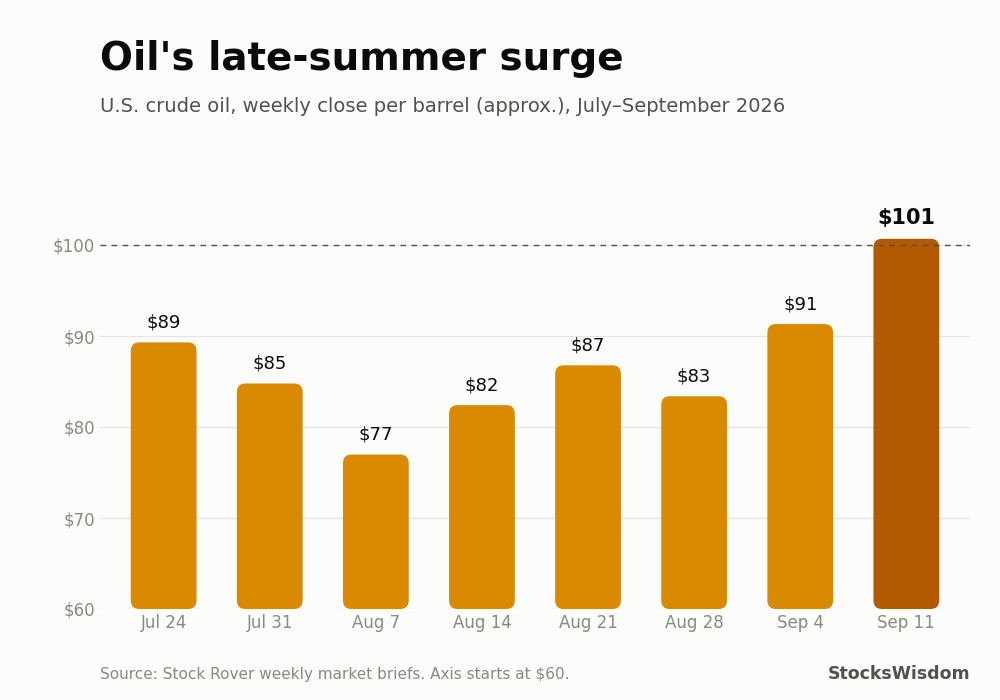
Brent crude, the global oil benchmark, traded around $110 a barrel on Monday morning. That’s up about 24% in a month and roughly 64% from a year ago (Yahoo Finance). U.S. crude closed last week above $100, too.
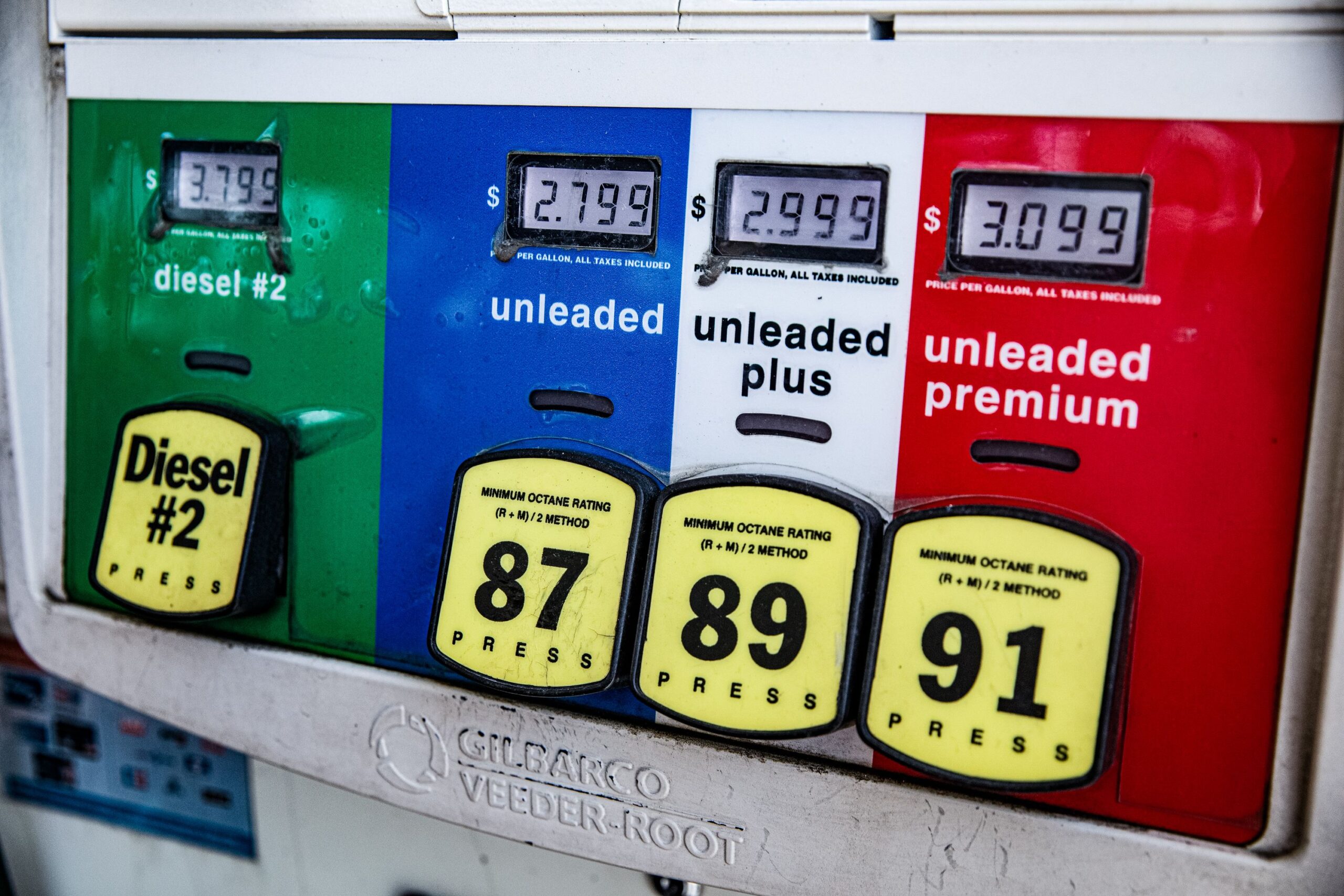
You’ve probably already felt it. AAA’s national average for regular gas hit $4.27 a gallon on September 10, up 13 cents in a single week and the highest ever for this time of year (AAA).
So what’s driving it, how much will it cost you, and what does $100 oil mean for your investments? Let’s go through it.
The short answer is supply fear. Three things hit at once last week (IndexBox):
Analysts now expect the disruption to drag into 2027. That matters, because markets can shrug off a one-week spike. They can’t shrug off months of tight supply.
A barrel holds 42 gallons. So every $1 rise in the price of a barrel adds roughly 2.4 cents to the cost of a gallon of gasoline, before refining, taxes and station margins.
Brent has climbed about $21 a barrel in the past month. By that rule of thumb, that’s roughly 50 cents a gallon of pressure working its way to the pump. Prices at the station tend to lag crude by a couple of weeks, which is why gas kept rising even on days oil dipped.
Here’s simple math for your own budget. If you drive 12,000 miles a year in a car that gets 25 miles per gallon, you burn about 480 gallons a year.
For a two-car household that drives that much, a $1 jump adds up to close to $1,000 a year that has to come from somewhere.
August’s consumer price index showed prices up 3.4% from a year earlier. Strip out food and energy and “core” inflation was just 2.4%. That gap is mostly energy.
Normally the Fed looks past oil spikes, because they tend to fade. The problem is how long this one could last. The Fed meets Tuesday and Wednesday, and three officials already voted for a rate hike back in the summer. If energy keeps pushing prices up, the case for higher rates gets stronger. That would mean higher borrowing costs on top of higher gas prices.
The impact on the stock market is lopsided.
Likely winners:
Likely losers:
Chasing a sector right after a big run is how many investors buy near the top. Energy is a cyclical business. When oil falls, these stocks can drop just as fast as they rose.
Look at what the forecasters expect. The U.S. Energy Information Administration’s August outlook had Brent averaging about $87 a barrel for 2026 and falling to $69 in 2027. If anything close to that happens, today’s prices are a peak, not a new normal.
A few more grounded ways to think about it:
For a quick read on whether energy names still have momentum or are starting to fade, StocksWisdom tracks sentiment and short-term forecasts for each ticker, including XOM, CVX and BP.
Oil above $100 is a real cost for households and a real tailwind for energy companies. It’s also driven by headlines that can reverse in a day. A ceasefire, a reopened shipping lane or a release from strategic reserves could pull prices down as fast as they rose.
Budget for higher gas prices for now, keep an eye on what the Fed says Wednesday, and be careful about piling into energy stocks after they’ve already had a big year. Are you changing anything about how you drive or invest because of oil prices?
Not financial advice. Do your own research.